

The UC Core Competency Model helps build a foundation for the culture we want at UC.
The UC Core Competencies were developed to provide a shared set of behaviors that reflect UC's vision and values.
The competencies clarify what strong performance looks like across UC and provide a shared framework for professional growth. Employees and managers are able to reference them to recognize strengths, identify development priorities, and focus learning and coaching goals.
Instructor-led classes, eCourses, books and on-the-job development activities are provided below to help you focus your development and build and strengthen the capabilities to achieve your goals.
Learning Resources
Achieving Results Learning
1. Continuous Improvement Competency
Strives for high-quality performance in self and the organization. Takes initiative in an ongoing effort to improve products, services or processes to deliver optimum results. Is resourceful, seeks alternatives and broad input; measures outcomes.
- Continuous Improvement Learning
- Fundamentals of Change Management
- Change Management for Supervisors and Managers
- Change Community of Practice
- Introduction to Root Cause Analysis
- Lean Six Sigma White Belt
- Lean Six Sigma Yellow Belt
- Lean Community of Practice
- Metrics that Matter
- Value Stream Mapping for Improved Process Flow
- Business Operations (eCourse bundle)
- Enabling Business Process Improvement (eCourse)
- Unleashing Personal and Team Creativity (eCourse)
- FRICTION: The Untapped Force That Can Be Your Most Powerful Advantage (Book)
- FRICTION: The Untapped Force That Can Be Your Most Powerful Advantage (Audio Book)
- Continuous Improvement Development Activities
- On the Job
- Relaunch an existing product, service, or process that is not doing well by gathering input from end users and trying things not tried before.
- Facilitate a brainstorming session—define and clarify the problem/opportunity, generate ideas using various techniques, and narrow the list to solutions you want to strengthen, test, and implement.
- Benchmark innovative business models, practices, processes, products, or services that come from both well-known and non-traditional sources, and report your findings to colleagues.
- Take part in an entire innovation cycle for a new product/service—from research, design, concept refinement, and prototyping, through to its launch and use.
- On large projects, establish a plan with pre-determined checkpoints at which you will evaluate progress and consider whether a change in direction or approach is necessary.
- Identify an unmet need and experiment with different ways to fill the gap. Practice seeing failures or mistakes as opportunities to learn.
- As you plan improvement projects, set milestones and criteria for success.
- On Your Own
- Volunteer with a professional or service organization to help improve programs or services.
- On the Job
2. Continuous Learning Competency
Demonstrates responsibility and ownership for one’s job and career path by identifying and expanding skillsets needed to perform successfully on the job. Consistently works to learn and increase knowledge. Asks for help when needed, admits mistakes and is open to feedback.
- Continuous Learning
- Focus on Your Talents with CliftonStrengths
- Your Flow State at Work
- Continuous Learning (eCourse bundle)
- Developing a Mindset of Growth and Learning (eCourse)
- How Will You Measure Your Life? (book)
- The 7 Habits of Highly Effective People: Powerful Lessons in Personal Change (audio book)
- The Positive Shift: Mastering Mindset to Improve Happiness, Health, and Longevity (audio book)
- How You Learn Is How You Live: Using Nine Ways of Learning to Transform Your Life (book)
- Continuous Learning Development Activities
- On the Job
- Take on a task that you have never tried or dislike to do and is outside of your usual area. Stick to it and focus on the learning you’re deriving from it.
- Teach/coach someone how to do something for which you are an expert. Invite them to tap into your knowledge and the lessons you took from your experiences.
- Attend a course or event which will push you beyond your usual limits or outside your comfort zone.
- Find and spend time with an expert to learn something in an area new to you, in either a work or non-work setting.
- Take on an assignment outside of your current organizational area to practice working within a different organizational culture.
- Complete an individual development plan to define areas in which you wish to develop and set actionable steps to take in developing in those areas.
- Consult with your manager regarding organizational needs; determine and how you can develop yourself to meet those needs.
- On the Job
3. Problem Solving Competency
Anticipates and identifies problems; conducts appropriate analysis to understand stakeholder interests. Generates and evaluates alternative solutions. Takes thoughtful risks.
- Problem Solving Learning
- Introduction to Root Cause Analysis
- 5S Your Outlook Inbox
- Outwitting Your Cognitive Bias (eCourse)
- Problem Solving: Defining and Stating the Problem (eCourse)
- Problem Solving: Generating Solutions (eCourse)
- Solve Problems Using Systems Thinking in the Workplace (eCourse)
- The Life-Changing Magic of Tidying Up: The Japanese Art of Decluttering and Organizing (audio book)
- Big Magic: Creative Living Beyond Fear (audio book)
- Problem Solving Development Activities
- On the Job
- Pay attention to improving your problem-solving techniques, especially under time pressures. Many of your decisions may be incorrect because they were made too quickly without sufficient information. Consider the following points before finalizing your decisions:
- Consider priorities based on importance and urgency, not what you find easiest.
- Ask yourself if colleagues could provide further relevant facts or advice.
- Be aware of long-term as well as short-term effects.
- Be deliberate and ensure that you have considered alternatives. Keep a log of decisions and the alternatives you considered. Try to develop at least one or two non-traditional alternatives to evaluate prior to making a final decision.
- Develop a greater awareness of issues peripheral to business-related problems; seek greater input on problems before making decisions.
- Look for relationships in problems. Diagram problems on paper and try to connect elements involved; determine the ebb and flow of information and responsibilities.
- Make a conscious effort to analyze a project for any unique combinations of data or sequencing, which may lead to more efficiency, less cost, or higher quality. Share these ideas with colleagues to get feedback.
- When all information is unavailable and firm decisions are necessary under tight time constraints, supplement deductive reasoning with judgments and use probability estimates.
- Analyze the outcomes of several decisions you recently made. Ask yourself, “What would have made the outcome better?” What would have helped you in making the decision?
- Pay attention to improving your problem-solving techniques, especially under time pressures. Many of your decisions may be incorrect because they were made too quickly without sufficient information. Consider the following points before finalizing your decisions:
- On the Job
4. Service Focus Competency
Values and delivers high quality, professional, responsive and innovative service to all customers. Establishes and maintains positive, long-term working relationships.
- Service Focus Learning
- UC Davis Customer Service Certificate
- Customer Service Relationships (eCourse bundle)
- Customer Service Operations (eCourse bundle)
- Customer Service Simulations
- Communicating Effectively with Customers (eCourse)
- Supply Chain (eCourse bundle)
- Be Our Guest: Perfecting the Art of Customer Service (audio book)
- What Customers Crave: How to Create Relevant and Memorable Experiences at Every Touchpoint (book)
- Be Amazing or Go Home: Seven Customer Service Habits That Create Confidence with Everyone (audio book)
- How to Talk to Anyone: 92 Little Tricks for Big Success in Relationships (book)
- How to Talk to Anyone: 92 Little Tricks for Big Success in Relationships (audio book)
- Service Focus Development Activities
- On the Job
- How would you identify your departments “constituents and stakeholders”
- Create a list of who you believe are you constituents and stakeholders. Interview or develop a questionnaire to evaluate whether your department is meeting their needs.
- Based on your constituents’ and stakeholders’ stated needs, develop a system or process to meet these needs.
- Interview students, faculty, administrators, and your peers to understand how your department’s services fit into the larger picture within UC.
- How would you identify your departments “constituents and stakeholders”
- On Your Own
- Take note of exemplary customer service in many contexts at work and outside of work.
- Consider questions such as: Who are the stakeholders? How were the customers recognized? How were difficult people handled respectfully?
- Apply what you have learned through observations to your own settings.
- Take note of exemplary customer service in many contexts at work and outside of work.
- On the Job
Building Relationships Learning
5. Belonging and Community Competency
Models, fosters, and promotes the University of California Principles of Community. Demonstrates empathy and respect for all people regardless of differences; promotes fairness and equity. Cultivates, champions, embodies, embraces, and supports a sense of equity, inclusion and belonging aligned with the University of California Principles of Community.
- Belonging and Community Learning
- Overcoming Your Own Unconscious Biases (eCourse)
- Living the Principles of Community (eCourse)
- Positive Atmosphere: Establishing a Positive Work Environment (eCourse)
- Inclusive Conversations: Fostering Equity, Empathy, and Belonging Across Differences (book)
- Inclusive Conversations: Fostering Equity, Empathy, and Belonging Across Differences (audio book)
- How to Be an Inclusive Leader: Your Role in Creating Cultures of Belonging Where Everyone can Thrive (book)
- How to Be an Inclusive Leader: Your Role in Creating Cultures of Belonging Where Everyone can Thrive (audio book)
- UC Davis Principles of Community (webpage)
- Employee Resource Groups (webpage)
- Belonging and Community Development Activities
- On the Job
- Review and attend programming offered by Inclusive Excellence and HEDI.
- Identify a cultural group or cultural issue(s) that you are unfamiliar with and learn more about. Find a program or interest group on campus who can help you expand your knowledge.
- Encourage your colleagues to express their disagreement when you sense there is a difference of opinion not being expressed.
- Emphasize the importance of each team member's contribution and demonstrate how all of their jobs operate together to help the entire team reach its goals.
- Solicit input from all team members, especially team members who are quiet or whose opinions are in the minority
- On Your Own
- Reflect on your own experience and identify a situation where another point-of-view was different from your own. Ask yourself, “What would have made that situation better?” and “Was there a decision made, and if so, what was the outcome?”
- Read a book on intercultural communication to understand how cultural values and beliefs affect communication behavior and style.
- Attend a multicultural event to learn and experience more about different communities.
- On the Job
6. Collaboration Competency
Interacts with others in ways that demonstrate collaboration and cooperation. Builds partnerships with others to achieve organizational results. Cultivates, builds and maintains positive relationships across the organization.
- Collaboration Learning
- Collaboration (eCourse bundle)
- Becoming a Successful Collaborator (eCourse)
- Strategies for Building a Cohesive Team (eCourse)
- Emotional Intelligence for Project Managers: The People Skills You Need to Achieve Outstanding Results (book)
- Generations, Inc: From Boomers to Linksters: Managing the Friction Between Generations at Work (book)
- The 10 Laws of Trust: Building the Bonds That Make a Business Great (book)
- Collaboration Development Activities
- On the Job
- Interview students, faculty, administrators, and your peers to understand how your department’s services fit into the larger picture within UC.
- Take a leadership role on a campus committee such as the Administrative Advisory Committees.
- Study organizational charts of your UC location to understand the structures and how they interact.
- Understand the role your department contributes to the missions of UC and your UC location. If possible, interview managers who are knowledgeable about the organization. Think of new ways you can contribute to your department’s interaction with other departments.
- Develop a working relationship. Whenever you have contact with a person from another department, take time to learn something new about their department.
- Work on a project with someone you’ve disagreed with in the past so you can practice give-and take dialogue, working through conflict, and finding shared goals and values.
- Volunteer to make a presentation on a group project. Ask everyone who participated on the project to help with the presentation and then debrief the situation after you are done.
- Resolve an issue in conflict between two people, units, geographies, functions. Help them share their perspectives, build understanding, and bring the issue to resolution.
- Manage a cost-cutting exercise or a project where there are various perspectives and inherent conflict, where you need to solve the problem and keep all parties satisfied.
- Take on a project that is too large for one person and requires cross-organizational collaboration in order to achieve results and solve the problem
- On the Job
7. Communication Competency
Clearly and effectively shares information both orally and in writing. Uses the most appropriate and effective medium for communicating. Adapts and adjusts messages in line with audience experience, role and background. Seeks input and actively listens; checks for understanding of messages.
- Communication Learning
- Ombuds workshops (webpage)
- Oral Communication (eCourse bundle)
- Written Communication (eCourse bundle)
- The Art and Science of Communication (eCourse)
- Become a Composed Public Speaker (eCourse)
- Choosing the Right Interpersonal Communication Method to Make Your Point (eCourse)
- Enhancing Communication Through Listening (eCourse)
- Crucial Conversations: Tools for Talking when Stakes are High (audio book)
- Collaborative Intelligence: Thinking With People Who Think Differently (audio book)
- Generations, Inc: From Boomers to Linksters: Managing the Friction Between Generations at Work (book)
- The Power of a Positive Team: Proven Principles and Practices that Make Great Teams Great (book)
- Communication Development Activities
- On the Job
- Interview your manager to get their perspectives on how the communication process is perceived at your UC site.
- Have a trusted colleague or friend give you feedback on your communication abilities. Ask the person to be very specific in their feedback, e.g. your use of gestures or particular words and other unconscious communication behaviors.
- For a period of one week, list the type of communication you do during the week. For example, when you make a telephone call ask yourself, “What was the topic? What was I trying to accomplish? What was the result?” When did you use the written word to communicate? How often did you use email or other technology to communicate? How effective were your communication efforts?
- Take a course in the delivery of presentations. Learn how to incorporate presentation technology and visual aids (e.g., chart pads, overheads, videos, PowerPoint) in your presentations.
- Practice your listening skills by rephrasing what you think the person said. Paraphrase questions you are asked to make sure you have understood the meaning of the question.
- In a staff meeting, bring out the positive ideas of others by verbally “playing back” to them what you heard, then probe to see if you have reached a deeper understanding of their position.
- To learn how to receive information from someone who disagrees with you, summarize or restate their position of disagreement. Ask the individual to verify whether your understanding is accurate. Neither of you may change your minds, but at least you may have learned to listen more effectively.
- Take on more written work assignments. See your supervisor for assignments.
- Analyze effective and ineffective samples of writing and apply what you have learned to your own writing.
- Outline what you want to say before you begin writing.
- Practice paying attention to both the content of message and the feelings and intentions behind the spoken words. When appropriate, ask specifically for feedback.
- Take the time to learn how others feel about an issue, and determine how they think the problems should be resolved.
- Encourage your employees to express their disagreement when you sense there is a difference of opinion not being expressed.
- On Your Own
- Learn and use a new word in your conversations or discussions each week. Try to incorporate the new words in your written communications.
- Volunteer or pursue opportunities to give presentations to become more comfortable before groups.
- Attend presentations and lectures to learn how experienced speakers express themselves. Consider what the speakers could have done differently to be more effective communicators.
- Try talking with people in groups rather than “at them.”
- Read literature about body language. Incorporate the skills you learned into daily life.
- Join a writing group and have your written samples evaluated regularly. Incorporate the group members’ feedback into your communications.
- Start an idea notebook for writing ideas, dreams, stories, etc., that you find provocative; they may be useful at a later time.
- Strengthen your business writing guidelines by reading business manuals.
- On the Job
Creating the Future Learning
8. Change Agility Competency
Anticipates and adapts to change. Supports change initiatives by energizing others at all levels and ensuring continued commitment when faced with new initiatives. Demonstrates tolerance and adaptability when dealing with ambiguous situations. Effectively plans for change and deals with setbacks through flexibility and resilience.
- Change Agility Learning
- Fundamentals of Change Management
- Change Management for Supervisors and Managers
- Change Community of Practice
- Enhancing Communication Through Listening (eCourse)
- Making the Most of Organizational Change (eCourse)
- Leading Your Team through Change (eCourse)
- The Power to Change: How to Harness Change, to Make it Work for You (book)
- Bounce Back: How to Fail Fast and be Resilient at Work (book)
- Resilience: How to Cope When Everything Around You Keeps Changing (audio book)
- Change Agility Activities
- On the Job
- Join professional organizations that will build your knowledge and allow you to meet your counterparts from other organizations. Ask them about their approaches, systems, or solutions and assess the relevance to your organization.
- Look for opportunities to gain experience working in a cross-cultural setting where you are required to work with people who come from different backgrounds and have different experiences.
- Work on a cross-functional task force where you interact with people from different backgrounds and areas of the organization.
- Volunteer to lead a project or take on a role that is related to your area of expertise where you have less experience.
- Find a mentor. Look for a person who you admire and who demonstrates very strong skills in analyzing issues and solving problems creatively.
- Set tasks that force you to shift gears, such as being a spokesperson in a tough issue, making peace with an enemy, or managing a team of novices. Try new behaviors and seek feedback on your approach.
- Support the implementation of a controversial new project or process that wasn’t your idea and that you don’t fully agree with. Mentally rehearse how you will respond to challenges from your audience.
- Take on a tough project where there are no clear answers or paths to completion. Wear different hats as you figure out how to deal with the variety of situations.
- On the Job
9. Mission and Vision Focus
Shows understanding of and commitment to the UC mission and vision.
- Mission and Vision Focus Learning
- Mission and Vision Focus Development Activities
- On the Job
- Learn more about the mission and impact of the University of California.
- Assist a floundering team in developing a clear sense of purpose and a compelling vision for the future.
- Take a strategic assignment that involves charting new ground and communicating the vision to a critical audience.
- Prepare and present a strategic proposal to senior leaders that involves a change in direction and a request for sponsorship and resources.
- Lead or be a team member on a start-up that requires creating a team charter to unify, focus, and inspire the team.
- On the Job
10. Stewardship Competency
Demonstrates accountability, discretion and sound judgment when utilizing tangible and intangible University resources to ensure the public trust.
- Stewardship Learning
- Stewardship Development Activities
- On the Job
- Work with an analyst to create a financial justification for the major purchase of equipment, materials, program, or system for your organization.
- Perform an audit on your team’s spending by examining your operations and present its findings and recommendations to your team. Anticipate the questions that are likely to come up and ensure you’re equipped to answer them.
- Create an online financial skills training course for new employees. Teaching someone else can be a great way to embed your own learning.
- Attend a meeting of the finance committee and summarize the main issues on the agenda. Ask for input from a member of the committee following the meeting to help clarify anything you’re unsure about.
- Lead your team in creating an annual budget, with full justification for all spending decisions. Build a robust business case and be prepared to talk through it.
- On the Job
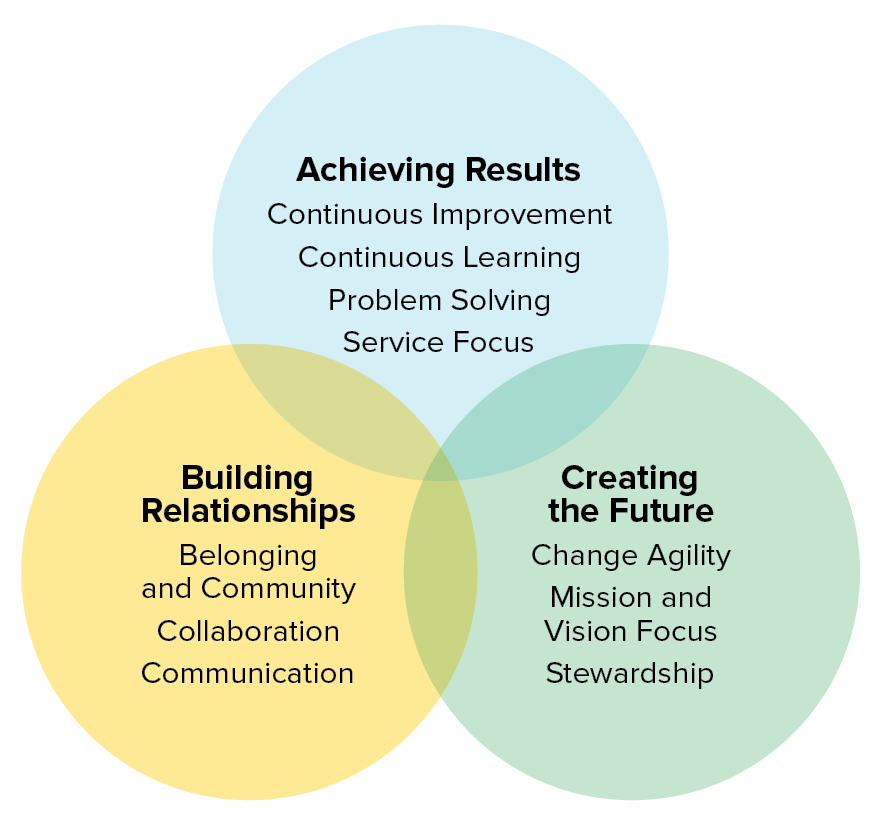
Core Competency Model
Learn more about the 2020 UC Core Competency Model that was endorsed by the Human Resources Leadership Consortium (HRLC). Access Resources at the bottom of the linked page.